








Introduction to Autonomous ai future
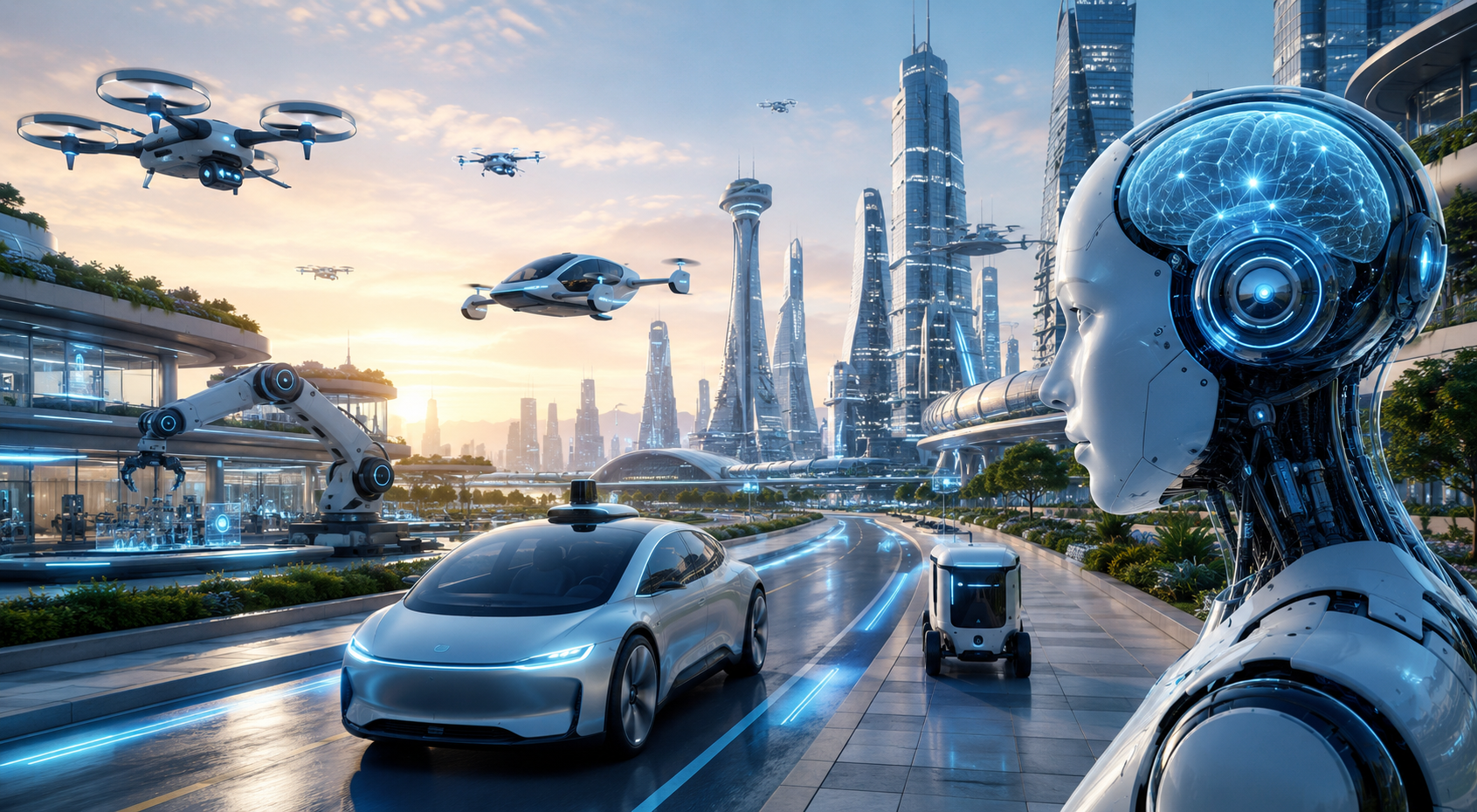
The concept of Autonomous ai future refers to the evolving development of artificial intelligence systems that can perform tasks, make decisions, and adapt to changing environments with minimal human intervention. Autonomous artificial intelligence is becoming one of the most transformative technologies of the modern era because it combines machine learning, automation, decision-making systems, and advanced computational capabilities into highly adaptive digital systems.
The future of autonomous AI is expected to influence industries such as healthcare, transportation, manufacturing, education, finance, cybersecurity, and scientific research. As computing power increases and data processing methods improve, autonomous AI systems are becoming more capable of solving complex problems and operating independently in dynamic environments.
Within the field of Artificial Intelligence, autonomy refers to the ability of machines to perform actions and make decisions without constant human control.
Understanding autonomous artificial intelligence
Autonomous artificial intelligence differs from traditional software because it can learn from data, adjust its behavior, and improve performance over time. Traditional software follows fixed instructions, while autonomous AI systems analyze information and adapt to changing conditions.
These systems rely on algorithms, neural networks, and data models to make predictions and decisions.
Within Computer Science, autonomous systems are considered an advanced form of computational intelligence.
Adaptive learning is a defining characteristic of modern AI.
Evolution of AI technology
Artificial intelligence has evolved significantly from early rule-based systems to modern machine learning and deep learning models. Early AI systems were limited in flexibility and required direct programming for each task.
Modern autonomous AI systems can recognize patterns, interpret data, and make decisions with increasing accuracy.
Within History of Technology, AI development is viewed as one of the most important technological revolutions of the digital age.
Continuous innovation has accelerated AI capabilities.
Role of machine learning in autonomous systems
Machine learning is a key technology behind autonomous AI. It enables systems to analyze large datasets, identify trends, and improve decision-making without explicit programming for every scenario.
Autonomous AI systems learn through repeated exposure to information and feedback.
Within Machine Learning, learning models are designed to optimize performance over time.
Data-driven learning increases system intelligence.
Autonomous AI in transportation
One of the most visible applications of autonomous AI is in transportation. Self-driving vehicles use sensors, cameras, and AI algorithms to navigate roads and respond to traffic conditions.
Autonomous transportation systems aim to improve safety, efficiency, and mobility.
Within Automotive Engineering, autonomous driving technology represents a major innovation in mobility systems.
AI-driven transportation is reshaping modern travel.
Healthcare transformation through AI
Autonomous AI is also transforming healthcare by supporting diagnostics, patient monitoring, and medical research. AI systems can analyze medical data and identify patterns that assist healthcare professionals.
These technologies may improve accuracy and efficiency in medical services.
Within Biomedical Engineering, AI is increasingly integrated into healthcare technologies.
Autonomous systems support faster data analysis.
Manufacturing and industrial automation
Industries are using autonomous AI to improve manufacturing processes, reduce errors, and increase productivity. AI-powered machines can monitor systems, predict maintenance needs, and optimize production.
Automation improves operational efficiency in industrial environments.
Within Industrial Engineering, automation is essential for modern production efficiency.
Smart factories rely heavily on autonomous technologies.
Financial systems and intelligent automation
Financial institutions are increasingly using autonomous AI for fraud detection, risk analysis, algorithmic trading, and customer support.
AI systems can process large amounts of financial data rapidly and identify unusual patterns.
Within Financial Technology, intelligent automation improves speed and analytical accuracy.
AI enhances financial decision-making processes.
Cybersecurity and autonomous defense systems
Cybersecurity systems are adopting autonomous AI to detect threats, monitor network activity, and respond to attacks in real time.
These systems improve digital security by identifying vulnerabilities more quickly than traditional methods.
Within Cybersecurity, autonomous monitoring systems are becoming critical defense tools.
AI strengthens digital protection mechanisms.
Ethical concerns surrounding autonomous AI
The future of autonomous AI also raises important ethical concerns related to privacy, accountability, decision-making, and employment disruption.
Questions about machine responsibility and fairness remain major topics of discussion.
Within Ethics, autonomous decision-making systems require careful oversight and regulation.
Ethical development is essential for responsible AI use.
Employment and workforce transformation
Autonomous AI may significantly transform labor markets by automating repetitive tasks and changing workforce requirements.
Some jobs may disappear while new technology-focused roles emerge.
Within Labor Economics, technological innovation strongly influences employment structures.
Workers may need new skills for future industries.
Education and AI-assisted learning
Educational systems are increasingly using AI-powered tools to personalize learning experiences and automate administrative tasks.
Autonomous educational systems can adapt learning content based on student performance.
Within Educational Technology, AI improves accessibility and customization in education.
Personalized learning supports better outcomes.
Human and AI collaboration
The future of autonomous AI is not limited to replacement of human work. Many experts believe AI will function as a collaborative tool that enhances human productivity and creativity.
Humans and AI systems may work together across various industries.
Within Human Computer Interaction, collaboration between humans and machines is a major research focus.
Balanced interaction improves efficiency and usability.
AI governance and regulation
As autonomous AI systems become more powerful, governments and organizations are developing regulations to ensure responsible use.
Policies may address transparency, data protection, safety, and accountability.
Within Public Policy, AI governance is becoming increasingly important.
Regulation helps reduce risks associated with advanced technologies.
Future of autonomous robotics
Autonomous AI is closely connected to robotics because intelligent machines require decision-making capabilities to operate independently.
Future robots may assist in healthcare, construction, agriculture, and household services.
Within Robotics, autonomous systems are essential for advanced robotic functionality.
AI-driven robots are expanding industrial possibilities.
Scientific research and AI innovation
Autonomous AI is accelerating scientific research by processing complex datasets and identifying patterns that humans may overlook.
Researchers use AI to model systems, simulate experiments, and analyze results more efficiently.
Within Data Science, AI supports faster and more accurate research processes.
Scientific discovery is becoming increasingly data-driven.
Social impact of autonomous AI
The rise of autonomous AI will likely reshape social interactions, communication methods, and daily lifestyles.
AI-powered assistants, smart systems, and automated services are already influencing modern society.
Within Sociology, technological systems strongly influence cultural and social structures.
AI is becoming integrated into everyday life.
Challenges in developing fully autonomous systems
Despite rapid progress, autonomous AI still faces challenges related to reliability, interpretability, and decision accuracy.
Complex real-world situations can be difficult for AI systems to fully understand.
Within Cognitive Science, replicating human reasoning remains a significant scientific challenge.
Advanced AI development requires continuous improvement.
Long-term vision of autonomous AI future
The long-term future of autonomous AI may involve highly intelligent systems capable of managing transportation networks, healthcare systems, industrial operations, and scientific exploration with minimal supervision.
These technologies could transform economic structures and daily life.
Within Future Studies, autonomous AI is considered one of the defining technologies of the future.
Its impact may extend across every sector of society.
Conclusion
The Autonomous ai future represents a major transformation in technology, industry, and human interaction. Within the framework of Artificial Intelligence, autonomous systems combine learning, decision-making, and automation to create increasingly capable technologies.
As innovation continues, autonomous AI is expected to influence transportation, healthcare, education, manufacturing, cybersecurity, and many other fields, shaping the future of society and global technological progress.